
Compare Bottle Materials: PPSU, Glass, Silicone
A gentle guide for parents: Choosing the right baby bottle material can shape everyday feeding in subtle but meaningful ways. From safety and durability to weight, comfort, and cleaning ease, PPSU, glass, and silicone each offer different advantages depending on your routine and priorities.
Comparison of PPSU, Glass, and Silicone Materials for Baby Bottles
The material of a baby bottle affects more than appearance. It influences heat resistance, durability, weight, handling comfort, and how easily the bottle fits into everyday feeding and cleaning routines.
PPSU, glass, and silicone each bring something different to the table. Understanding these differences can help parents choose the option that feels safest, most practical, and most supportive for their family’s needs.
| Material | Best Known For | Strengths | Considerations |
|---|---|---|---|
| PPSU | Durability and heat resistance | Lightweight, impact-resistant, sterilizer-friendly | Usually higher priced than basic plastics |
| Glass | Purity and nonreactive surface | No chemical leaching, preserves taste, easy to sterilize | Heavier and more breakable |
| Silicone | Softness and flexibility | Comfortable to hold, lightweight, lower breakage risk | May leak if assembled incorrectly; quality varies by brand |
PPSU (Polyphenylsulfone)
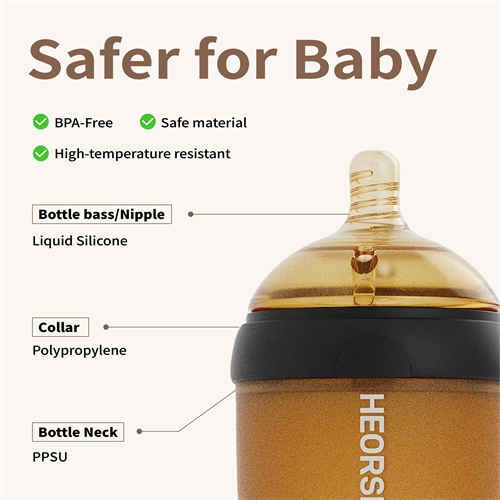
PPSU is a high-performance material known for its excellent impact resistance and impressive thermal stability. It tolerates temperatures up to 180°C (356°F), making it well suited for repeated sterilization and daily use.
In baby bottle applications, PPSU is typically free of BPA, PVC, and phthalates, and it can usually be cleaned in the dishwasher without significant shape change or wear.
Glass
Glass is often chosen for its purity and inert surface. It does not leach chemicals into milk or formula and works well with standard sterilization methods.
With careful handling, glass bottles can last a long time. Their main trade-off is breakage risk, especially in busy daily routines or on-the-go feeding.
Silicone
Silicone bottles are soft, flexible, and easy to grip, which many parents find appealing. Their lightweight feel also makes them convenient for travel and everyday handling.
They are generally easy to clean and sterilize, though a secure fit of closures and components is especially important to help prevent leaks.
Research comparing sterilization performance across bottle materials has also explored hygienic outcomes among different substrate types.
Research Note: Sterilization Efficacy Across Bottle Materials A referenced study evaluated the effectiveness of commercial baby bottle sterilizers in inactivating Salmonella Typhimurium on different bottle materials, including glass, PPSU, and silicone. Reported reduction levels were highest on silicone, followed by PA, PPSU, and glass.
What Are the Key Advantages of PPSU Baby Bottles?
PPSU bottles are often chosen by parents who want a strong balance of safety, resilience, and day-to-day practicality. They’re especially well suited to families looking for a bottle that feels lightweight in hand while still standing up to repeated sterilization.
Why many parents choose PPSU
- Durability: PPSU resists impact and high heat, helping extend the life of the bottle.
- Safety: It is commonly made without BPA, PVC, and phthalates.
- Ease of cleaning: Dishwasher compatibility makes daily care simpler and more convenient.

How Does PPSU Material Ensure Durability and Heat Resistance?
PPSU is valued for its thermal stability and structural integrity at elevated temperatures. It can withstand exposure up to 180°C (356°F) without significant deformation under normal care conditions, which makes it highly compatible with repeated sterilization.
Its impact resistance also lowers the likelihood of cracking or breaking compared with more brittle materials, which is one reason PPSU is often considered such a dependable choice for everyday feeding.
How Do Glass Baby Bottles Compare in Terms of Safety and Purity?
Glass bottles are often appreciated for their clean, nonreactive surface and material simplicity. Because food-grade glass does not leach chemicals into contents, many parents choose it for peace of mind and taste neutrality.
Glass is also compatible with standard sterilization methods, making it a dependable option for families who prioritize purity and easy hygiene.
What Safety Certifications and Standards Apply to Glass Bottles?
Glass baby bottles commonly align with recognized safety specifications and consumer product standards related to material safety and manufacturing controls.
- BPA-free: confirms bisphenol A is not present
- PVC-free: indicates polyvinyl chloride is not used
- Phthalate-free: reflects the absence of phthalates
These designations help parents verify that a product meets established safety expectations and material compliance standards.
What Are the Pros and Cons of Silicone Baby Bottles?
Silicone bottles offer a softer feel and a lighter, more flexible experience than rigid bottles. For many parents, that means easier handling and less worry about accidental drops.
Pros
- Soft and comfortable to hold
- Easy to clean and sterilize
- Lightweight and travel-friendly
Considerations
- May leak if closures are not fitted correctly
- Can cost more than some other options
How Does Silicone Material Affect Flexibility and Cleaning Ease?
Silicone’s flexible structure helps reduce fracture risk compared with glass and can make the bottle feel more comfortable in hand. It is generally easy to wash and often dishwasher-safe, depending on product guidance.
High-quality silicone also tends to resist odors and stains better, which can simplify day-to-day maintenance.
Which Baby Bottle Material Best Balances Safety, Durability, and Design?
The best bottle material depends on what matters most in your daily routine.
- PPSU is ideal for parents looking for heat resistance, durability, and lightweight convenience.
- Glass is often preferred for purity, inertness, and taste neutrality.
- Silicone stands out for softness, flexibility, and ease of handling.
In many families, the “best” choice is not universal. It’s the one that aligns most naturally with your feeding habits, cleaning preferences, and sense of comfort.
How Do Gender-Neutral and Stylish Designs Influence Material Choice?
Design also plays a meaningful role. Many modern parents look for feeding products that feel timeless, calm, and suitable for a variety of family preferences.
Materials like PPSU and silicone support versatile color palettes and soft, contemporary silhouettes, making it easier to pair function with a thoughtful, gender-neutral design approach.
Frequently Asked Questions
What are the environmental impacts of using PPSU, glass, and silicone baby bottles?
Environmental impact varies by lifecycle, durability, transport weight, and recycling options. Glass is recyclable and reusable but may require more energy in production and transport. PPSU is durable and long-lasting but not biodegradable. Silicone is also non-biodegradable and may require specialized recycling pathways.
How do I properly sterilize baby bottles made from different materials?
Sterilization depends on the bottle’s thermal tolerance and manufacturer instructions. Glass can usually be boiled or sterilized with commercial devices. PPSU generally tolerates boiling and dishwasher sterilization. Silicone can often be boiled or steam sterilized, provided all parts are assembled and handled correctly.
Are there any specific health concerns associated with silicone baby bottles?
Silicone is widely used in infant feeding products, but product quality matters. Choosing food-grade silicone made without BPA, PVC, and phthalates can help reduce concerns related to fillers or lower-quality additives. Regular inspection for wear is also recommended.
What factors should I consider when choosing a baby bottle for a newborn?
Look at material safety, sterilization compatibility, bottle weight, cleaning convenience, and overall design. PPSU offers strong heat and impact resistance, glass offers purity, and silicone offers flexibility and light handling. Nipple shape and flow rate also play an important role in newborn feeding.
How do baby bottle materials affect the taste of milk or formula?
Glass is non-porous and is often preferred for preserving taste. PPSU is typically processed to be odorless and tasteless. Silicone may retain odors more easily if not cleaned thoroughly, so consistent washing and proper drying are important.
What are the best practices for maintaining baby bottles made from different materials?
Clean bottles regularly, sterilize as needed, and inspect all parts for wear. Glass should be handled gently to avoid chipping or breakage. PPSU can usually be hand-washed or dishwasher-cleaned. Silicone should be cleaned gently and checked for discoloration, deformation, or damage over time.
Thoughtful materials make everyday feeding feel easier
Whether you value durability, purity, or soft flexibility, the right bottle should support both your baby’s comfort and your daily rhythm. HEORSHE designs with that balance in mind.
Explore HEORSHE Bottles